
Staying in Okuhida makes your trip a little more luxurious.
When I go on a trip, I often feel like driving to my destination.
When I lived in Saitama, my car was simply a means of getting to my destination.
But after coming to Okuhida, I learned that there are trips that begin from the point where you park your car.
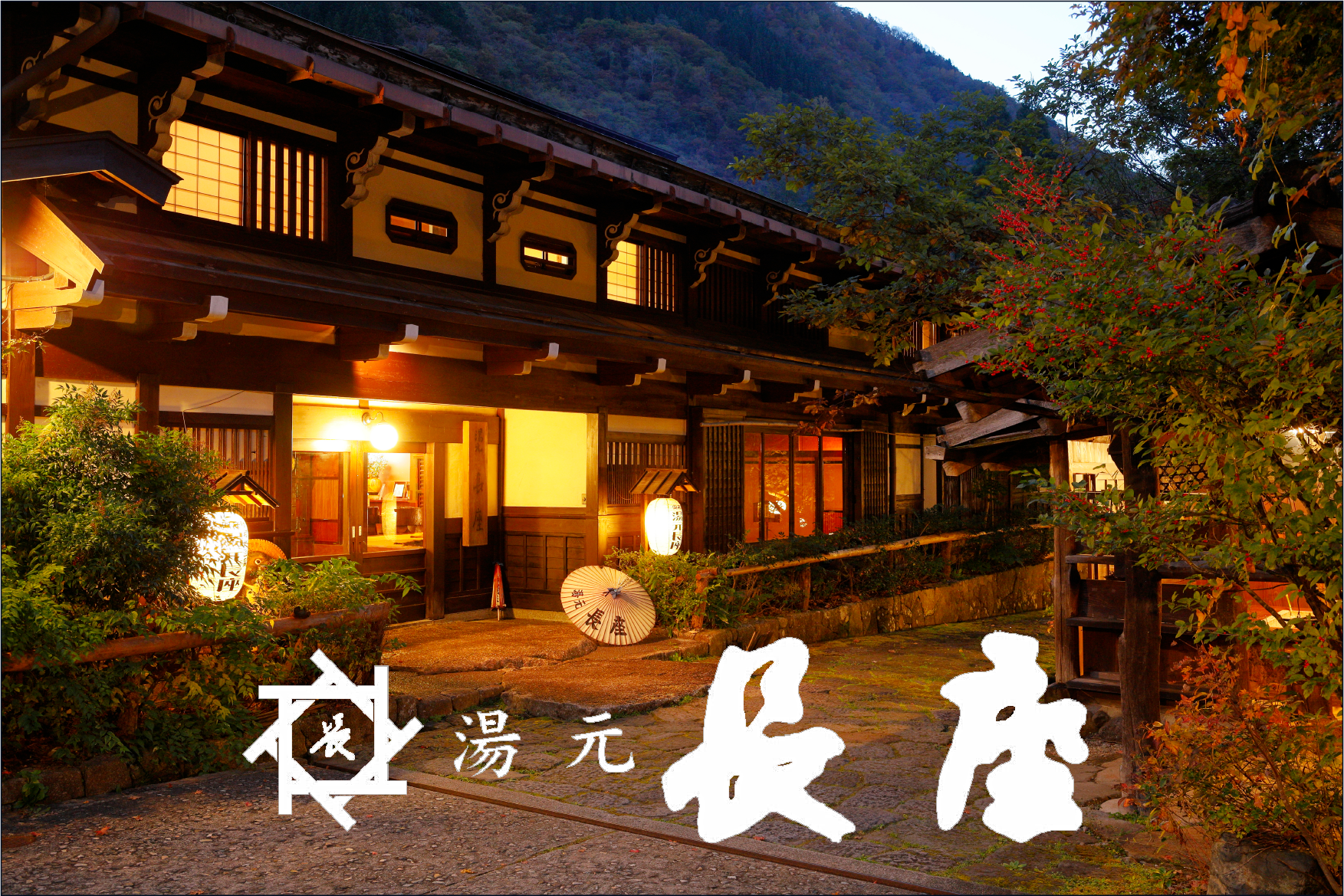
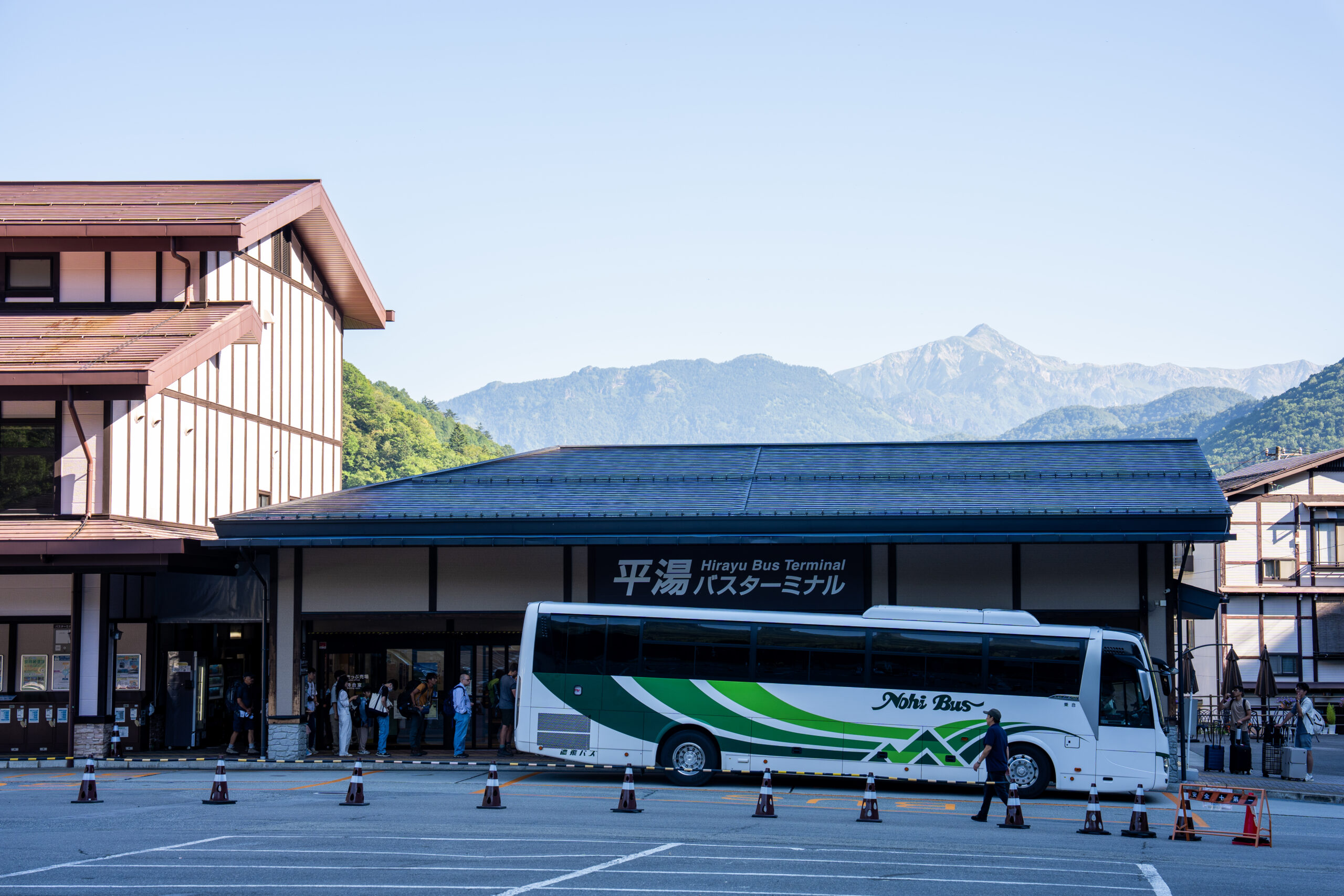
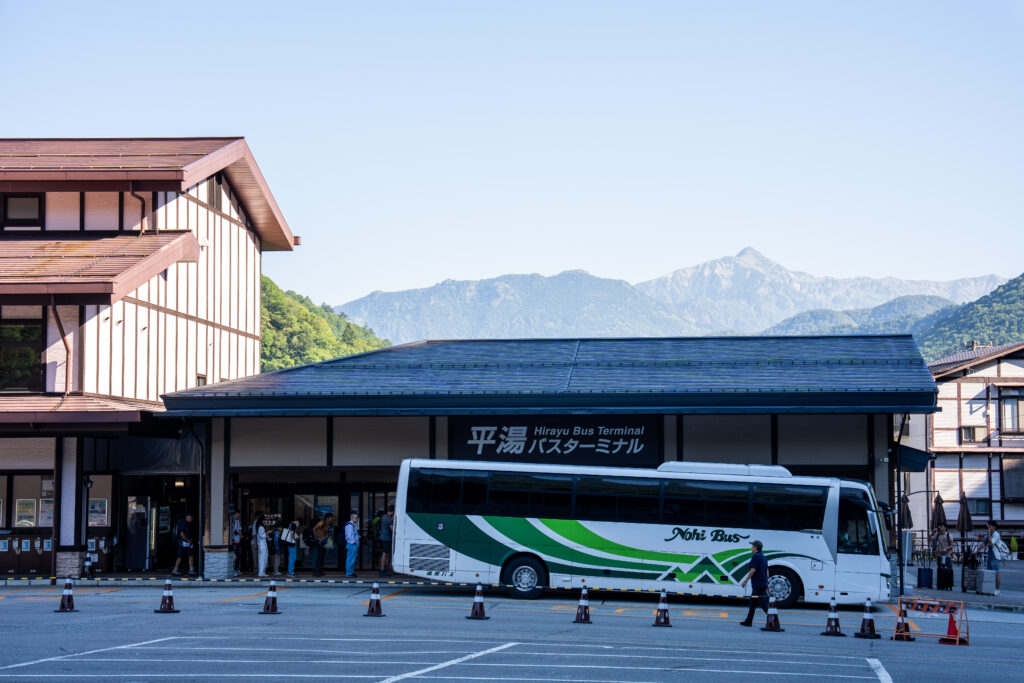
The journey began in Hirayu Onsen.
In the morning, I walked from the inn to the Hirayu bus terminal.
The car keys are still in my pocket. I won't be touching the steering wheel today.
That small sense of liberation alone made the start of the trip feel a little different than usual.
The bus I'll be taking is the "Norikura Ptarmigan Route Sightseeing Bus."
This route starts in Okuhida Onsenkyo and takes you to Norikura Tatamidaira, Norikura Plateau, and Kamikochi all in one day.
Both Norikura and Kamikochi have restrictions on private cars, so it's difficult to get around on your own.
With this bus, you can simply enjoy the mountain scenery while listening to the guide's explanations.
It takes you to your destination. You don't have to drive.
With just that, a mysterious and fascinating experience began, one that even changed the way you saw the scenery.
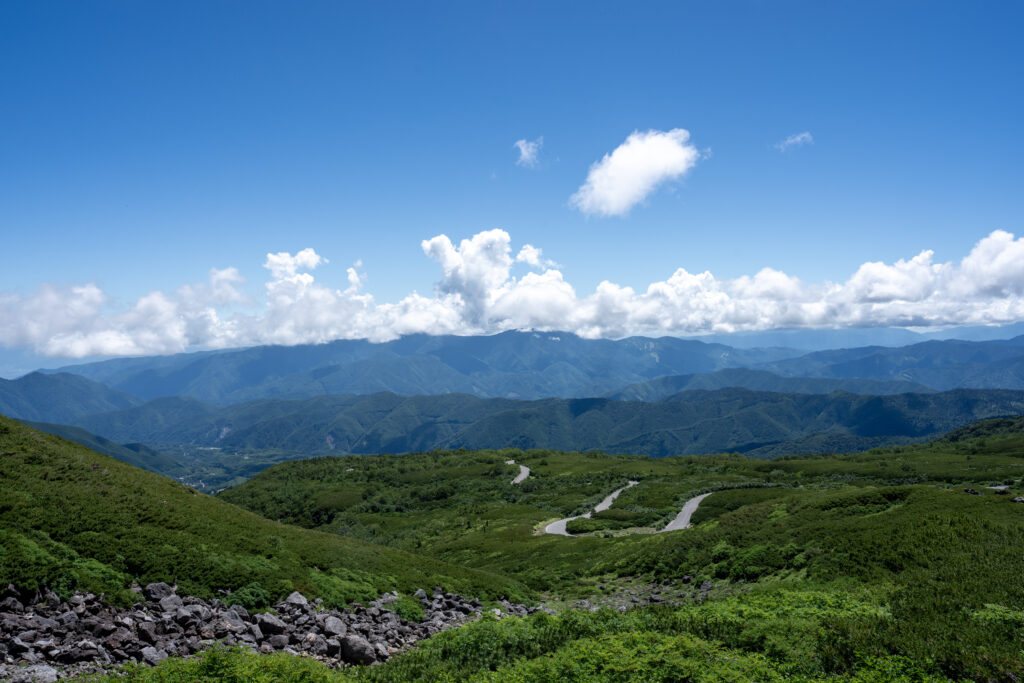
After departing Hirayu, the bus slowly ascends the Norikura Skyline.
As I looked out the window, I noticed something.
The trees are getting shorter little by little.
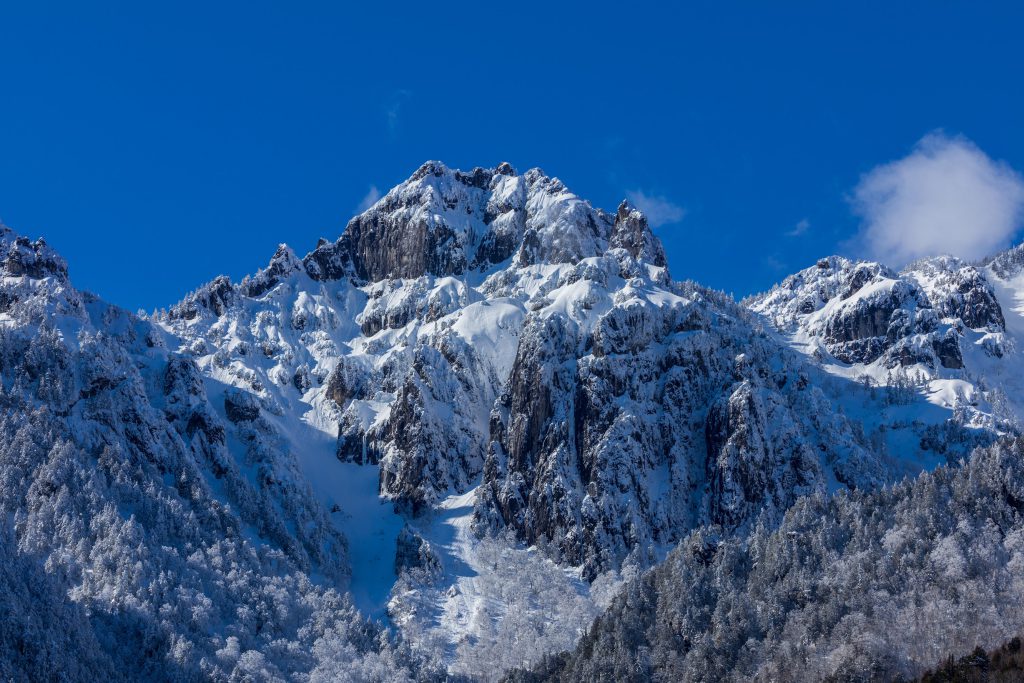
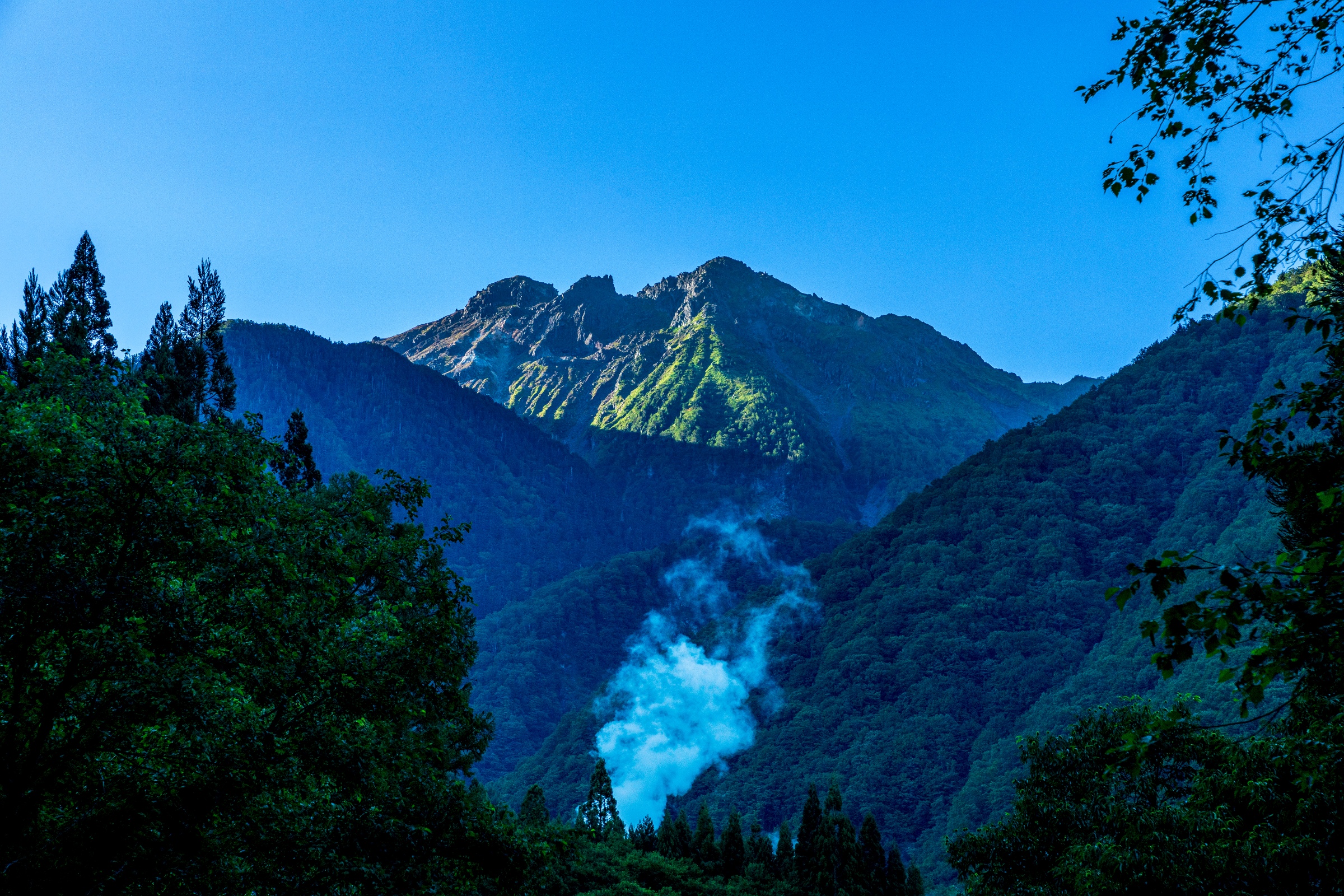
The scenery, which initially consisted of tall forests, changes to birch trees, and as you gain more altitude, it becomes covered with shorter dwarf pines.
As the forest ended, the sky seemed much closer. The mountain itself gradually began to change its appearance.
Even just looking out the window, the scenery tells you that you're climbing a mountain.
It felt as if I had arrived in a completely different place from the world I had been in just a few minutes earlier.
Being able to slowly observe such changes from the window of the bus seemed to me to be one of the great pleasures of traveling by bus.
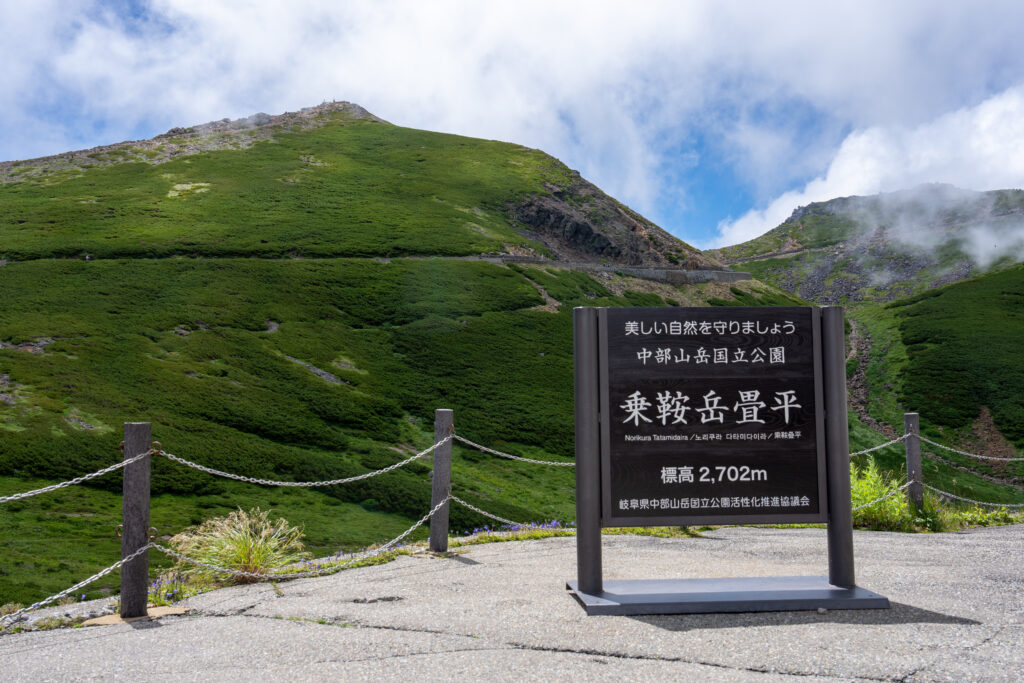
And the elevation is 2,702 meters.
We're heading to Norikura Tatamidaira, Japan's highest-altitude bus terminal.
My body sensed the altitude before I even noticed the number.
The air is cold. The light is close. The sky is vast.
The air was so pleasant that it made me want to take a deep breath.
A world quite different from the coolness and atmosphere of Hirayu awaited me.
People strolling slowly through the flower fields. People admiring the scenery with cameras in hand. People heading towards Mount Maō.
And then there are those who, equipped with full gear, continue their hike towards Ken-ga-mine, which lies beyond.
The main peak of Mount Norikura, Kengamine, is 3,026 meters above sea level.
It is one of only 21 peaks in Japan that are over 3,000 meters high.
Even though we were all standing on the same Tatamihira platform, each person spent their time there in their own way.
Just looking at the scenery is fine. Taking a short walk is also a good idea.
And someday, it would be nice to embark on a journey to reach that summit.
Watching those people, I realized that this is a place to enjoy a spectacular view, and at the same time,
I realized it was also an "entrance" to go into the mountains.
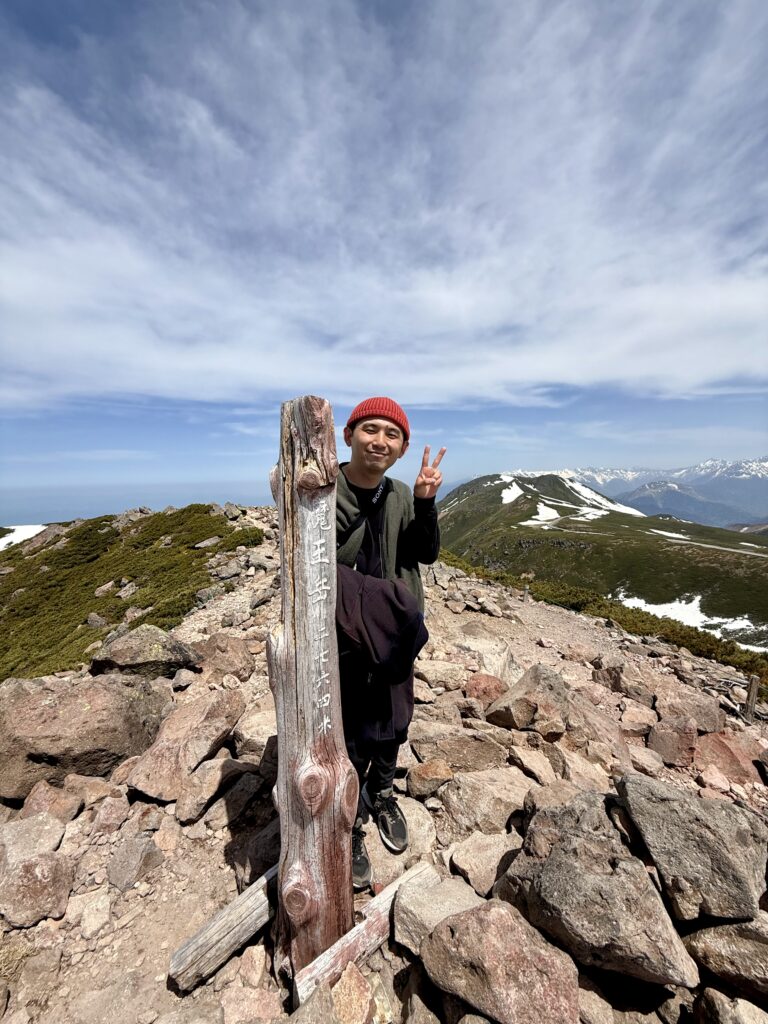
Feeling liberated, I climbed Mount Maōdake, a hike that took about 30 minutes round trip.
The view you see after climbing up on your own two feet is more than just "beautiful."
That scenery is strangely memorable.
While gazing at the peak of Kengamine visible in the distance,
"Next time, I'd like to go that far."
I was enveloped in that feeling.
The rock ptarmigan, after which this route is named, is known to have one of the largest habitats in Japan, particularly on Mount Norikura.
Although we weren't able to see it this time, it's still living somewhere in these mountains.
Just thinking that made this scenery feel a little special.
Travel isn't just about what you see; that's what makes a memory.
I think that taking time to imagine the lives that truly exist in this place is also part of the journey.
After leaving Tatamidaira, the scenery gradually changes again.
In Norikura Plateau, you'll be on the side looking up at Mount Norikura.
It's the same mountain, yet it's showing a completely different face than before.
Some people eat lunch here, while others ride e-bikes across the plateau.
My favorite place was the Norikura Nature Conservation Center.
Learning about the animals, plants, and ecosystems that live on this mountain will help you understand the ecosystem.
The scenery I was looking at just a moment ago now looks a little different.
It might be a place that reminds us once again that things become more interesting when we learn more about them.
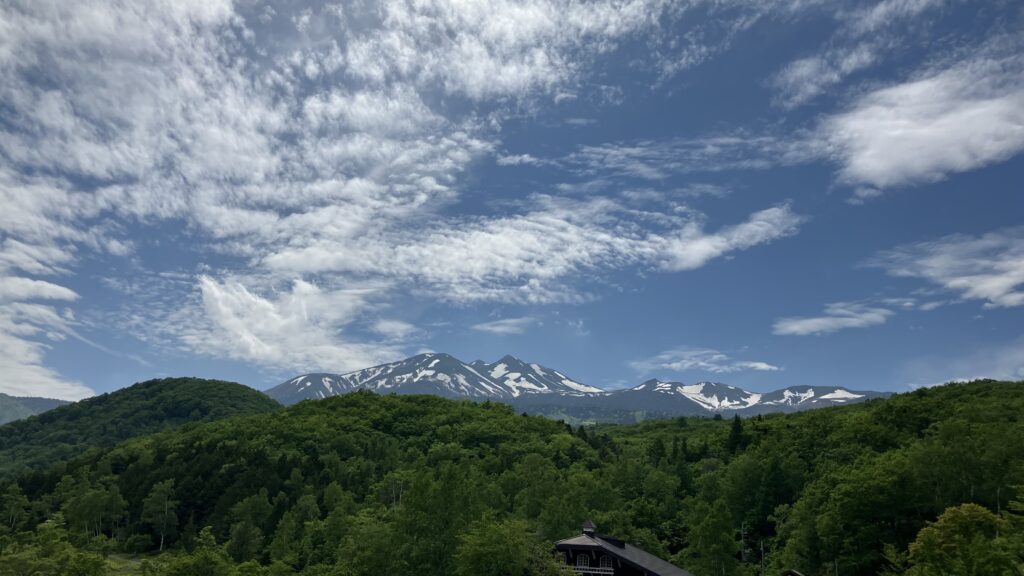
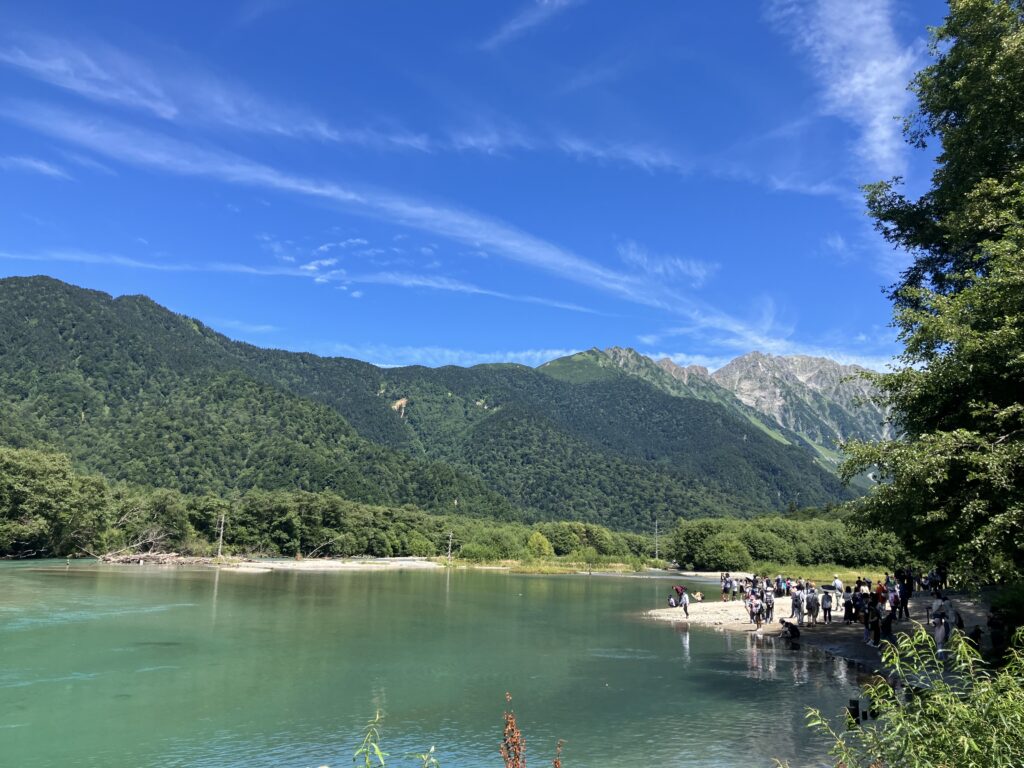
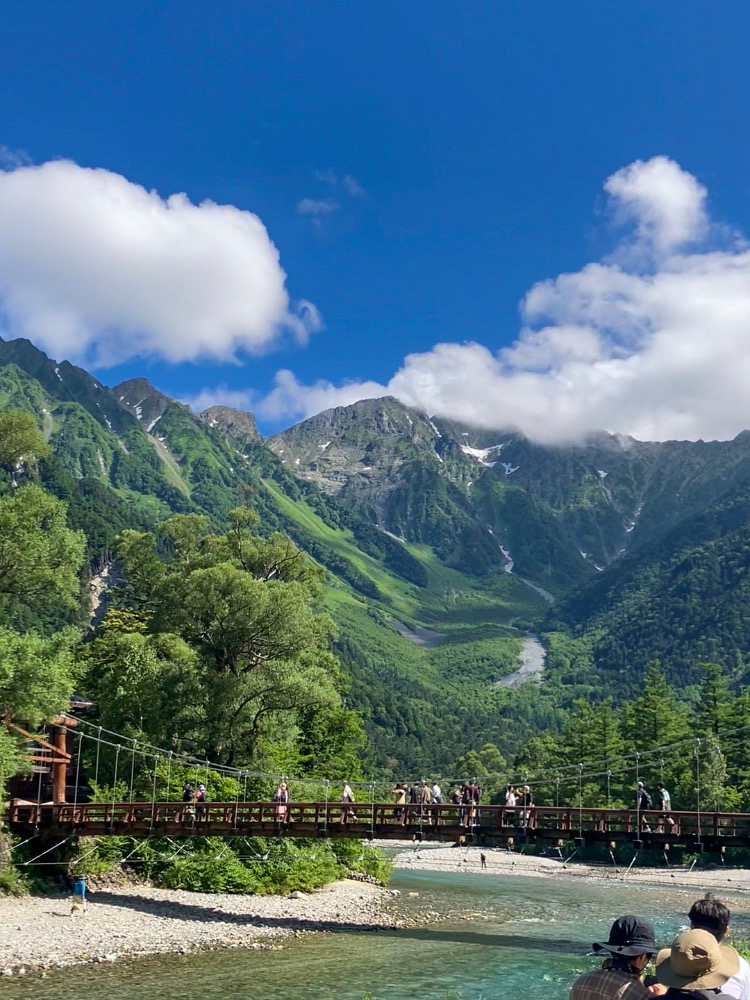
And finally, the last stop on our trip was Kamikochi, a place we had been looking forward to.
No matter how many times I see it, I always feel that this view is special.
There are things you can only feel when you experience them at the end of the day.
The journey began with looking up at the mountains in the morning, and at Tatamidaira, we were at the same eye level as the mountains.
Finally, I looked up at the mountain once more.
In just one day, the sense of distance from the Northern Alps changes repeatedly.
Rather than saying I went around looking at the mountains,
I spent the day in the mountains.
That's how I felt.
In the evening, we returned to Hirayu Onsen.
Crossing the prefectural border, we climbed to an altitude of 2,700 meters.
Looking up at the mountains, or viewing them at eye level.
It was a luxurious experience to spend a whole day circling the Northern Alps.
That pleasant feeling still lingered in my body.
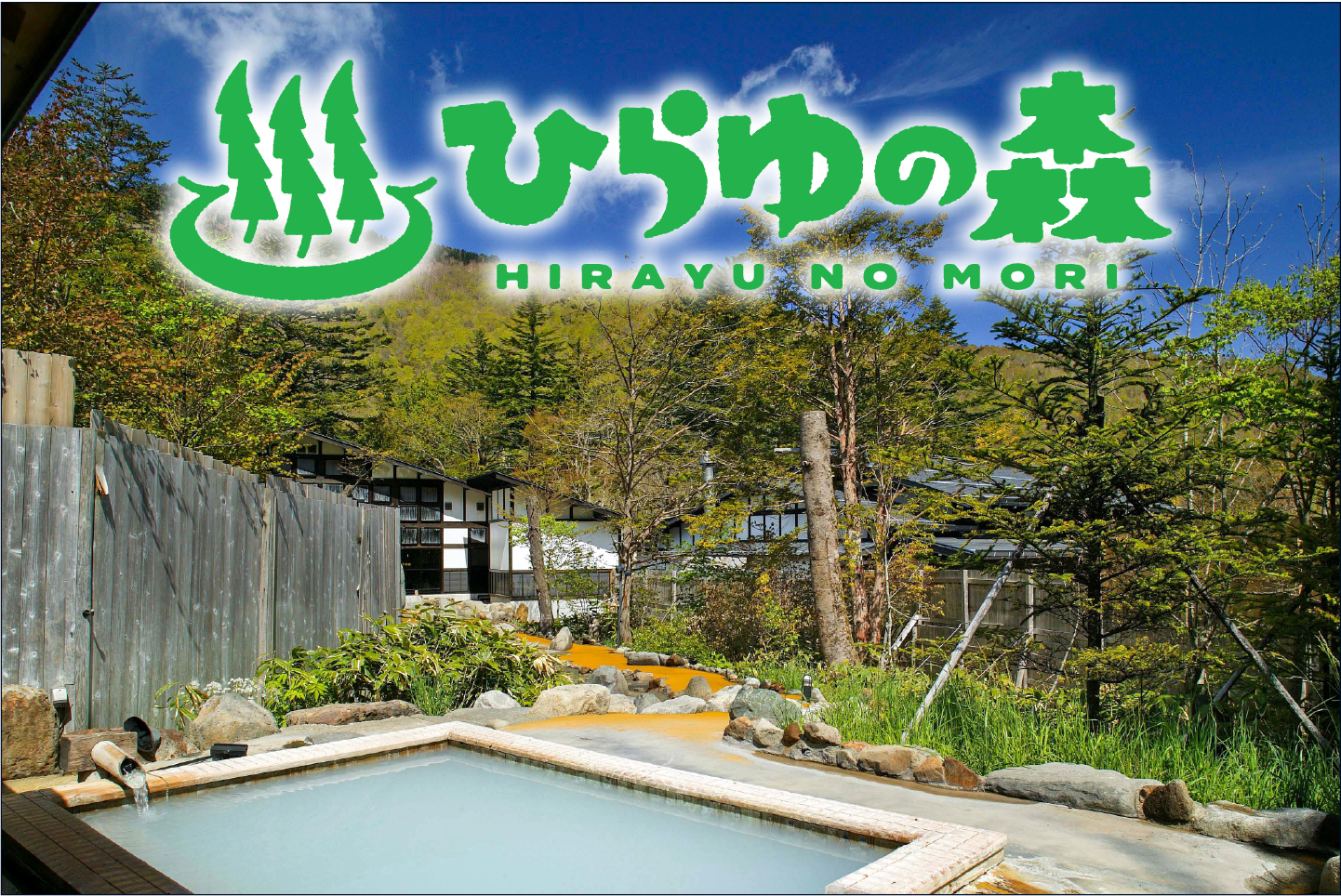
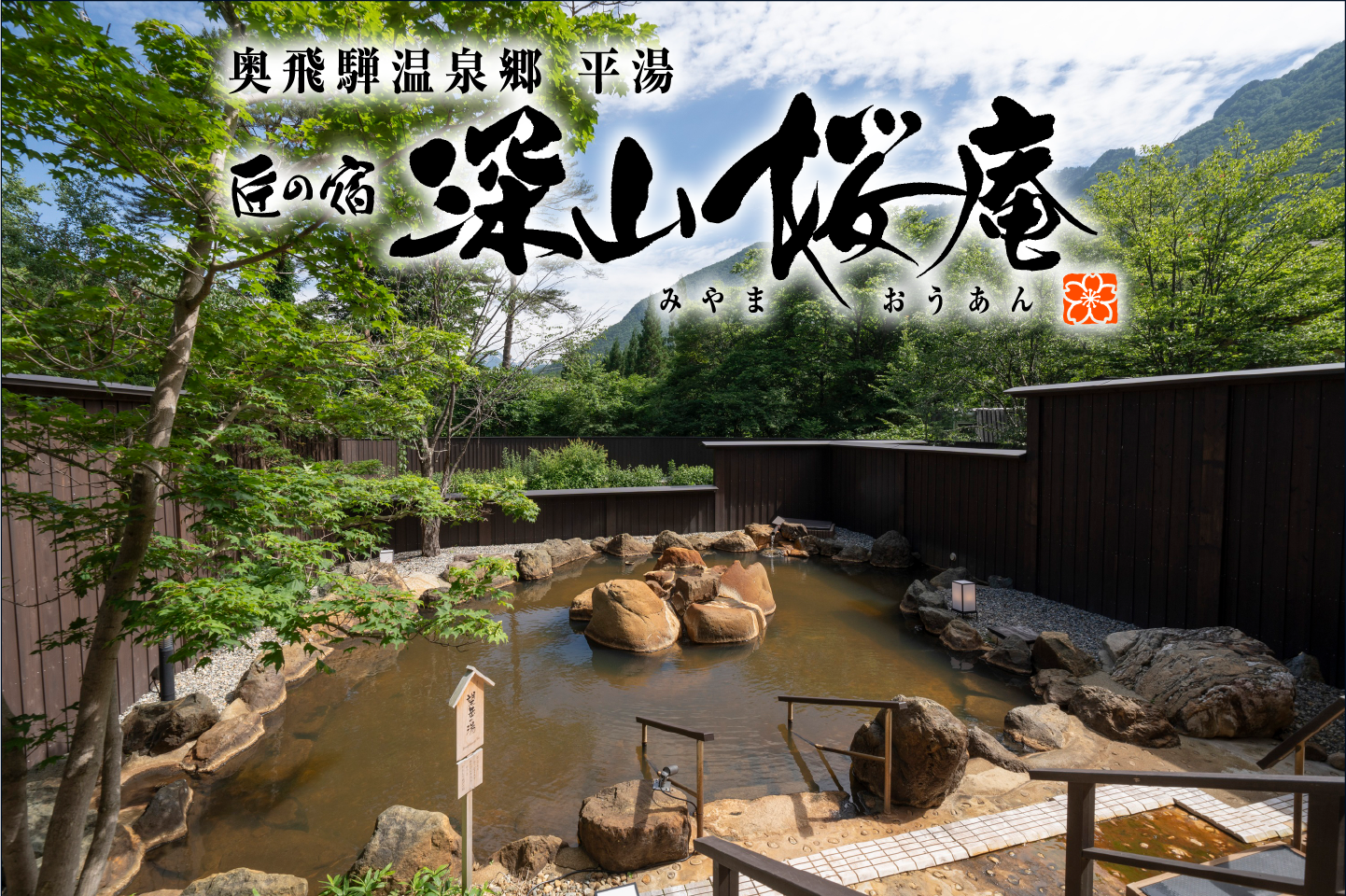
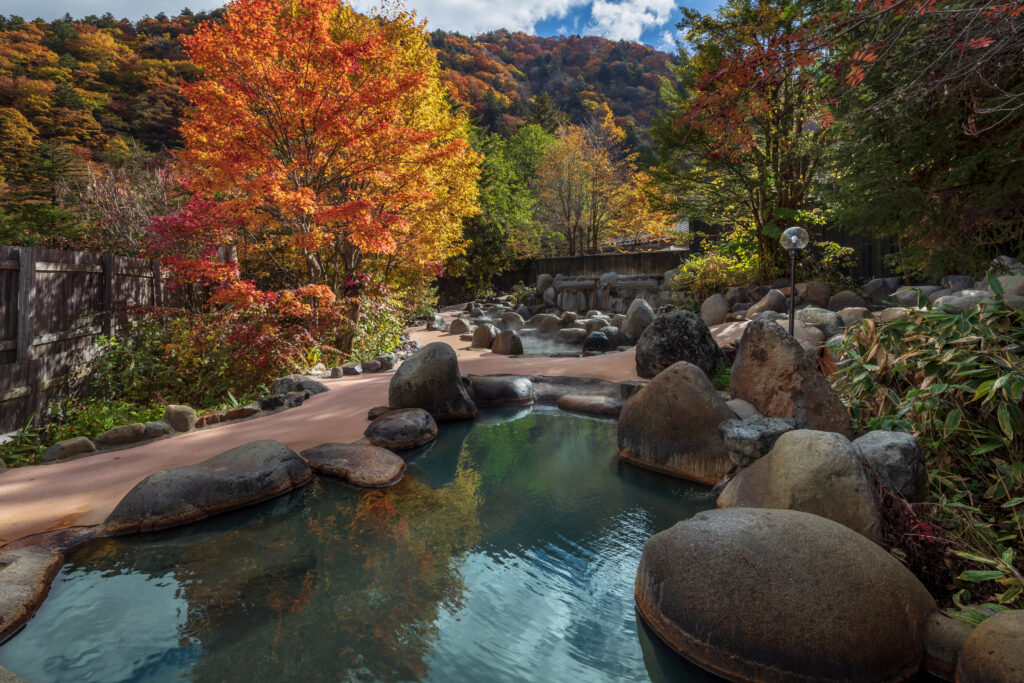
Then, we headed straight to the open-air bath at "Hirayu no Mori".
As I soak in the bath, the mountains I saw today slowly flow through my mind.
In the morning, "Let's go see some beautiful scenery."
That's how I felt when I started out, and that's who I am now.
I should have returned to the same place,
My perspective on travel had changed just a little.
As I traveled, changing my distance from the Northern Alps,
Perhaps my connection with nature had also grown a little closer.
That gives me yet another reason to stay in Okuhida.
Okay, next time too, let's leave the car and go on a trip.
— The Writer —
Kono Hikaru / From Saitama Prefecture. Member of the Regional Revitalization Cooperation Team at the Okuhida Onsenkyo Tourism Association.
I'm exploring the unique aspects and charms of this place from an outsider's perspective.
Lately, I've become more interested in "how I spend my time" than "where I go."